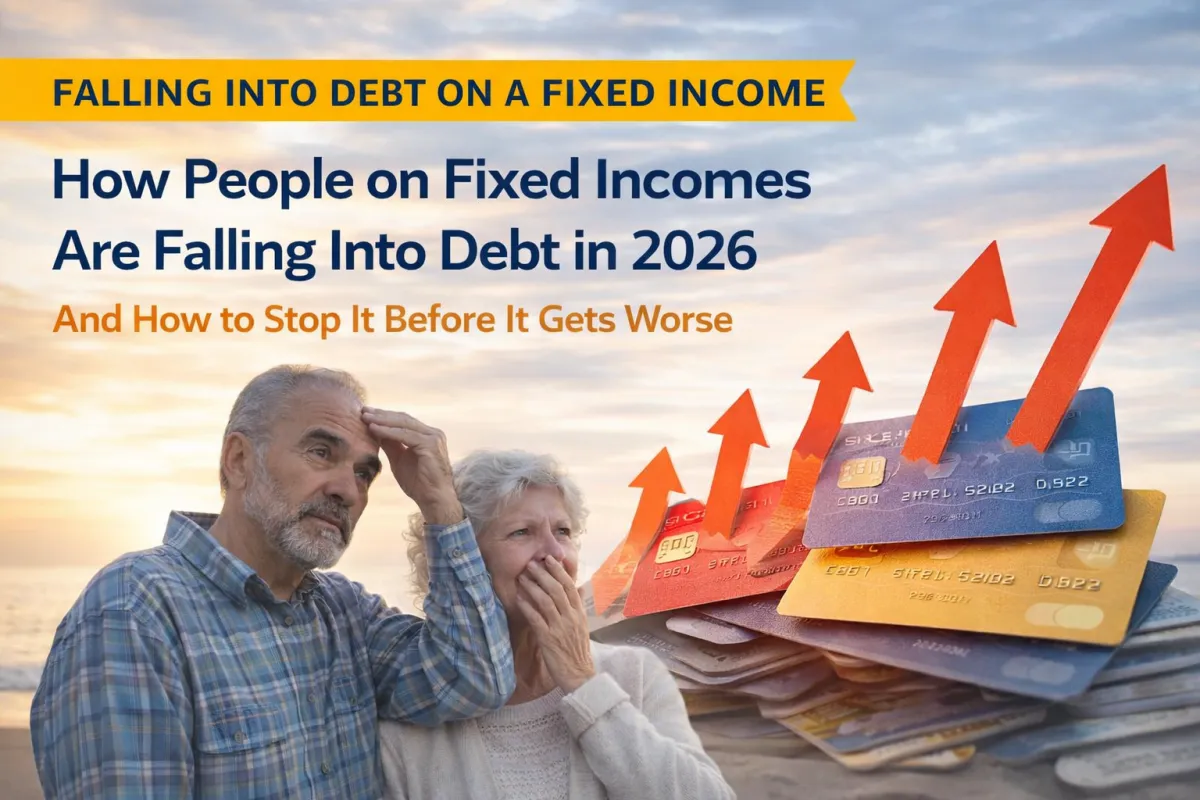
How People on Fixed Incomes Are Falling Into Debt in 2026 And How to Stop It Before It Gets Worse
Why Debt Is Hitting People on Fixed Incomes Harder Than Ever
If you are living on a fixed income, you already know something has changed.
What used to be manageable is no longer working. Groceries cost more. Utilities cost more. Healthcare costs more.
But your income? It has not kept up.
This is not just a feeling. It is happening nationwide. Rising costs and high interest rates are putting pressure on households, especially those relying on Social Security, pensions, or disability income.
And when income stays the same while expenses rise, there is only one place people turn.
Credit cards.
The Real Problem No One Talks About
Most people do not fall into debt overnight.
It starts small.
A grocery trip goes on a credit card.
A medical bill gets pushed off.
An emergency repair gets financed.
At first, it feels temporary.
But here is where things spiral.
Credit card interest rates are now over 20 percent on average
Minimum payments increase
Balances grow faster than you can pay them down
For people on fixed incomes, there is no room to catch up.
Over time, debt stops being a short term solution and becomes a long term trap.
Inflation Is Quietly Making It Worse
Inflation does not hit all at once.
It creeps in.
Food costs increase
Gas prices fluctuate
Insurance premiums rise
Medical expenses grow faster than everything else
For someone earning a steady paycheck, there is sometimes room to adjust.
For someone on a fixed income, there is not.
That gap between income and expenses slowly turns into debt.
And once that happens, it compounds.
Because now you are not just paying for life.
You are paying for life plus interest.
The Breaking Point Most People Miss
There is a moment where debt shifts from stressful to dangerous.
It usually looks like this:
You are only making minimum payments
You are using credit to cover essentials
You are avoiding opening bills
You feel like you will never catch up
At this stage, the strategy most people try does not work.
“Just budget better” is not enough.
Because the problem is no longer spending.
It is structure.
What Actually Works for Debt Relief on a Fixed Income
If you are serious about getting out of debt, you need a different approach.
Not more effort.
A better system.
1. Lower the Cost of Your Debt First
Trying to pay off high interest debt without changing the interest rate is like running uphill.
Options that can help include:
Negotiating lower interest rates
Consolidating multiple debts into one payment
Working with structured repayment plans
Experts consistently point out that reducing interest is often more effective than simply increasing payments.
2. Stop the Cycle of Using Credit for Essentials
This is the hardest step, but it is critical.
If you are using credit cards for:
Groceries
Utilities
Medical costs
Then debt will continue growing no matter what plan you follow.
This is where restructuring your payments becomes necessary.
3. Use a Debt Relief Strategy That Matches Your Income
Not all solutions are created equal.
For people on fixed incomes, flexibility matters more than speed.
Some of the most effective options include:
Debt management plans
Debt settlement programs
Structured payment reductions
These approaches focus on making your payments realistic, not just aggressive.
The Biggest Mistake to Avoid Right Now
Waiting.
Debt does not stay the same.
It grows.
Interest compounds.
Fees add up.
Collectors become more aggressive over time.
The longer you wait, the fewer options you have.
You Are Not Alone And You Are Not Stuck
Millions of Americans are dealing with the same situation right now.
Rising costs.
Limited income.
Growing debt.
This is not a personal failure.
It is a system problem.
But that does not mean you have to stay in it.
There are real, structured ways to reduce what you owe, lower your payments, and regain control.
The key is taking action before the situation becomes overwhelming.
What to Do Next
If your debt is starting to feel unmanageable, the worst thing you can do is ignore it.
The best thing you can do is understand your options.
Start by looking at your full financial picture.
Then explore solutions that are designed specifically for fixed income situations.
Because the goal is not just to survive your debt.
It is to get out of it.
Take the First Step
If you are ready to explore your options and see what relief could look like for your situation, visit: