Can You Get Debt Relief on a Fixed Income? What Seniors and Retirees Need to Know
Can You Get Debt Relief on a Fixed Income? What Seniors and Retirees Need to Know
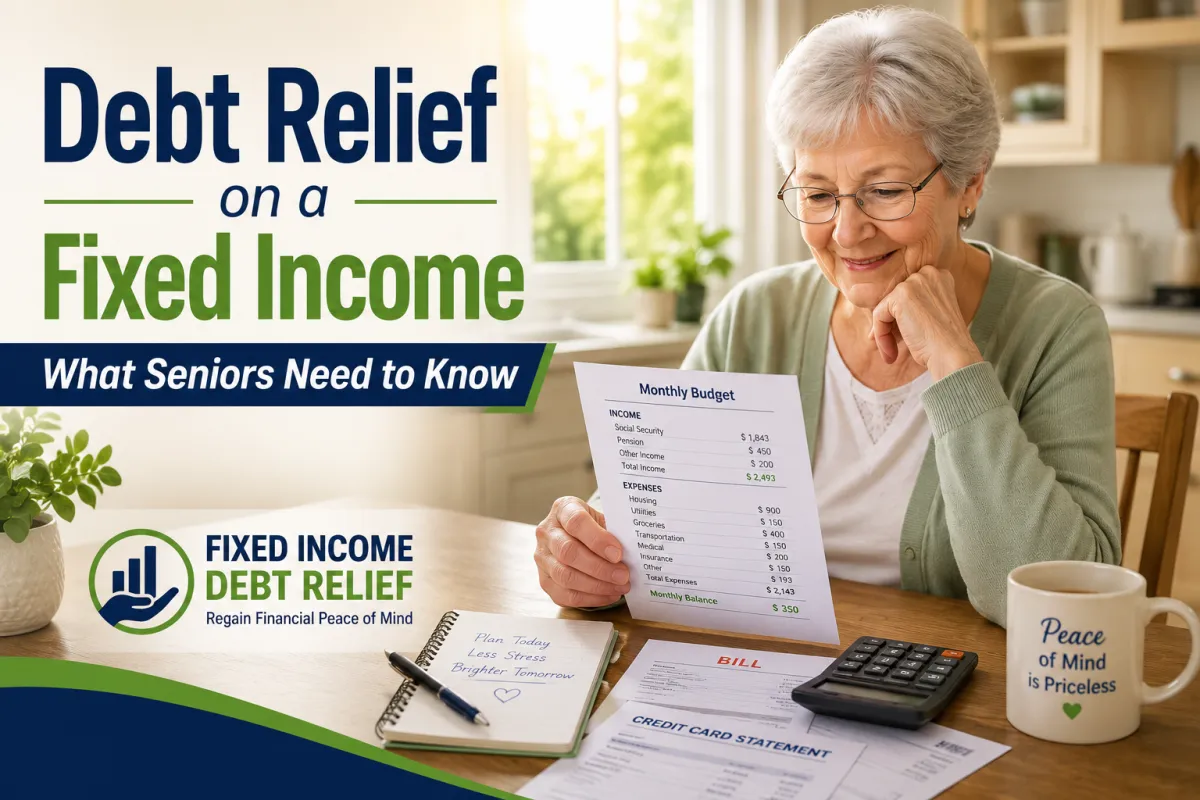
If you are living on Social Security, a pension, disability income, or a combination of retirement benefits, debt can feel especially overwhelming.
Every month starts with the same question: Will there be enough money?
Housing costs continue to rise. Groceries cost more than they did a few years ago. Medical expenses seem to appear when you least expect them. Meanwhile, credit card balances, personal loans, and old debts continue demanding payments.
Many seniors and retirees feel trapped. They believe they have only two choices: keep struggling to make minimum payments or accept that debt will follow them forever.
The reality is different.
Debt relief may be available even if you live on a fixed income. Understanding your options can help you regain control, reduce financial stress, and create a path toward a more stable future.
In this guide, we'll answer some of the most common questions seniors ask about debt relief and explain how fixed-income households can explore solutions that fit their situation.
Why Debt Has Become a Growing Problem for Seniors
Retirement is supposed to be a time when financial pressures ease. Unfortunately, that is not the reality for many Americans.
Many retirees enter retirement carrying debt from years earlier. Others accumulate debt after retirement due to unexpected circumstances such as:
Medical emergencies
Rising housing costs
Supporting adult children or grandchildren
Inflation
Reduced income after leaving the workforce
Loss of a spouse
Home repairs and maintenance costs
What starts as a manageable credit card balance can slowly become a major burden.
Minimum payments may keep accounts current, but they often do little to reduce the principal balance. Interest charges continue accumulating month after month.
For someone on a fixed income, even a small increase in expenses can create a financial crisis.
Common Signs Debt Is Becoming Unmanageable
Many people wait too long before seeking help because they assume their situation is not serious enough.
Here are some warning signs that debt may be becoming difficult to manage:
You Are Using Credit Cards for Basic Living Expenses
If groceries, utilities, medications, or gas are regularly being charged because monthly income is not enough, debt may continue growing faster than it can be repaid.
You Only Make Minimum Payments
Minimum payments often cover mostly interest and very little principal.
As a result, balances can remain for years or even decades.
You Are Choosing Between Bills
Many seniors find themselves deciding whether to pay a credit card, buy medication, or cover utility costs.
This is a major indicator that debt is affecting financial stability.
Collection Calls Are Increasing
Frequent collection calls, letters, and account notices often indicate that balances have become difficult to manage.
Financial Stress Is Affecting Your Health
Debt is not only a financial issue.
Many retirees report:
Trouble sleeping
Anxiety
Depression
Relationship strain
Constant worry about the future
When debt begins affecting your quality of life, it may be time to explore solutions.
Can Seniors Qualify for Debt Relief?
One of the biggest misconceptions is that debt relief is only for people with high incomes.
In reality, many debt relief programs are designed to help individuals who are struggling financially.
Qualification depends on several factors, including:
Amount of unsecured debt
Income sources
Ability to make payments
Financial hardship circumstances
Overall financial picture
Fixed income alone does not automatically disqualify someone from seeking debt relief options.
Every situation is unique.
What Types of Debt May Qualify for Relief?
Debt relief programs often focus on unsecured debt.
Unsecured debt generally includes:
Credit cards
Personal loans
Medical bills
Certain collection accounts
Secured debts such as mortgages and vehicle loans are usually handled differently because property serves as collateral.
Understanding the type of debt you have is an important first step when evaluating possible solutions.
Debt Relief Options for Fixed-Income Households
There is no one-size-fits-all solution.
The right approach depends on your financial situation, debt amount, income, and goals.
Here are some options that may be worth exploring.
Debt Resolution Programs
Debt resolution programs are designed to help individuals who are unable to fully repay unsecured debt under the original terms.
These programs may involve negotiating with creditors to resolve debts for less than the full balance owed.
For retirees struggling with large credit card balances, this can sometimes provide a path toward becoming debt-free faster than continuing minimum payments indefinitely.
Debt Management Plans
Debt management plans typically involve working with a credit counseling organization.
The goal is often to consolidate multiple payments into one structured monthly payment while potentially reducing interest rates.
This option may work well for individuals who can still afford to repay their balances over time.
Direct Creditor Hardship Programs
Many creditors offer hardship programs for customers experiencing financial difficulties.
These programs may provide:
Reduced interest rates
Lower monthly payments
Temporary payment relief
Alternative repayment arrangements
Many seniors are surprised to learn that these programs exist.
Budget Restructuring
Sometimes debt challenges are worsened by an outdated budget that no longer reflects current expenses.
A detailed review of income and spending can identify opportunities to free up cash flow.
Even small improvements can make a meaningful difference over time.
What About Social Security Income?
Many retirees worry that receiving Social Security prevents them from seeking debt help.
This concern often comes from confusion about how debt collection and income sources work.
The important thing to understand is that having Social Security income does not automatically prevent you from exploring debt relief options.
In fact, many individuals who seek debt assistance rely heavily on Social Security benefits.
Since every financial situation is different, speaking with a qualified debt professional can help clarify which options may fit your circumstances.
Real-Life Example: How Debt Can Snowball on a Fixed Income
Imagine a retired widow named Carol.
Carol receives Social Security and a small pension.
Several years ago, she used credit cards to cover medical expenses after a hospital stay.
At first, the balances seemed manageable.
Then inflation increased grocery costs. Utility bills rose. Prescription expenses became more expensive.
Soon, Carol was using one credit card to help pay another.
Her balances grew from $8,000 to over $25,000.
Despite making monthly payments, most of her money was going toward interest.
Carol felt embarrassed and avoided discussing her situation with anyone.
Eventually, she learned that debt relief options existed for people living on fixed incomes.
By exploring her available solutions, she was able to better understand her choices and take steps toward reducing her financial stress.
Carol's story reflects what many retirees experience every day.
Debt problems rarely happen overnight.
They often develop slowly through a series of difficult financial decisions made during challenging circumstances.
Why Many Seniors Delay Getting Help
Even when debt becomes overwhelming, many people hesitate to seek assistance.
There are several reasons for this.
Pride
Many retirees spent decades paying bills responsibly.
Asking for help can feel uncomfortable.
Fear of Judgment
Some people worry they will be criticized for having debt.
In reality, financial hardship affects people from all backgrounds and income levels.
Lack of Information
Many seniors simply do not know what options are available.
They assume nothing can be done.
Hope That Things Will Improve
People often believe the situation will eventually work itself out.
Unfortunately, interest charges can make debt grow larger over time.
The sooner someone understands their options, the more opportunities they may have to improve their situation.
Questions to Ask Before Choosing a Debt Relief Solution
Before enrolling in any program, it is important to ask questions.
Consider the following:
What Is the Total Amount of Debt?
Knowing exactly what you owe helps determine which options may be appropriate.
What Is Your Monthly Income?
A clear understanding of income helps establish realistic payment expectations.
Which Debts Cause the Most Stress?
Prioritizing high-interest accounts or collection accounts may help create a more effective plan.
How Long Will Resolution Take?
Every program has a different timeline.
Understanding expectations can help avoid surprises later.
What Are the Potential Benefits and Drawbacks?
Every financial solution involves tradeoffs.
Make sure you understand how a program works before making a decision.
Taking the First Step Toward Financial Relief
Debt can feel isolating.
Many seniors believe they are facing these challenges alone.
The truth is that millions of retirees and fixed-income households struggle with debt every year.
The good news is that options may be available.
Whether the challenge involves credit card balances, medical debt, personal loans, or collection accounts, learning about possible solutions is often the first step toward regaining financial confidence.
You do not need to have all the answers today.
You simply need to understand that help may exist and that exploring your options does not commit you to any specific program.
Knowledge creates clarity.
Clarity creates confidence.
And confidence creates the ability to move forward.
If debt is creating stress, affecting your monthly budget, or making retirement more difficult than it should be, now may be the right time to learn what solutions could be available for your situation.
Visit https://fixedincomedebtrelief.com/ to learn more about debt relief options designed for individuals living on a fixed income.